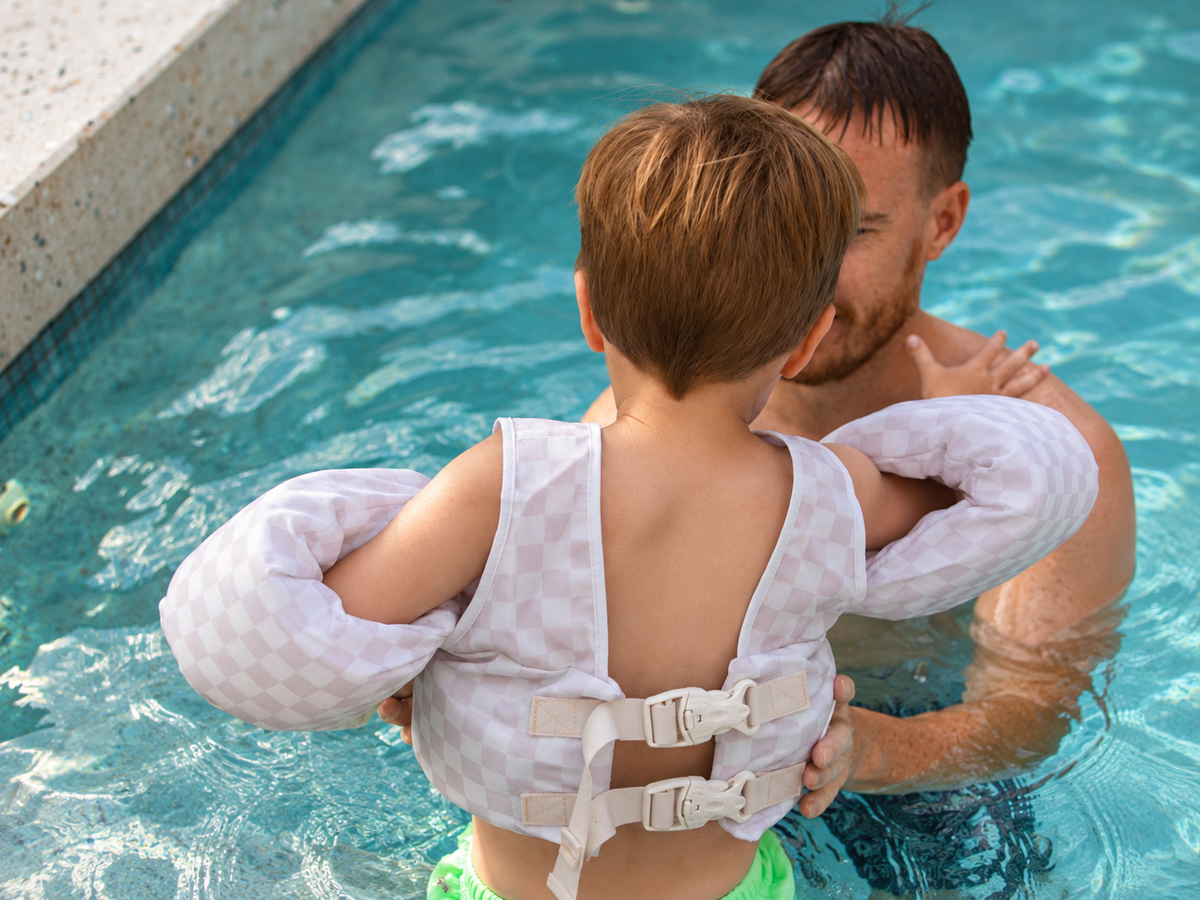

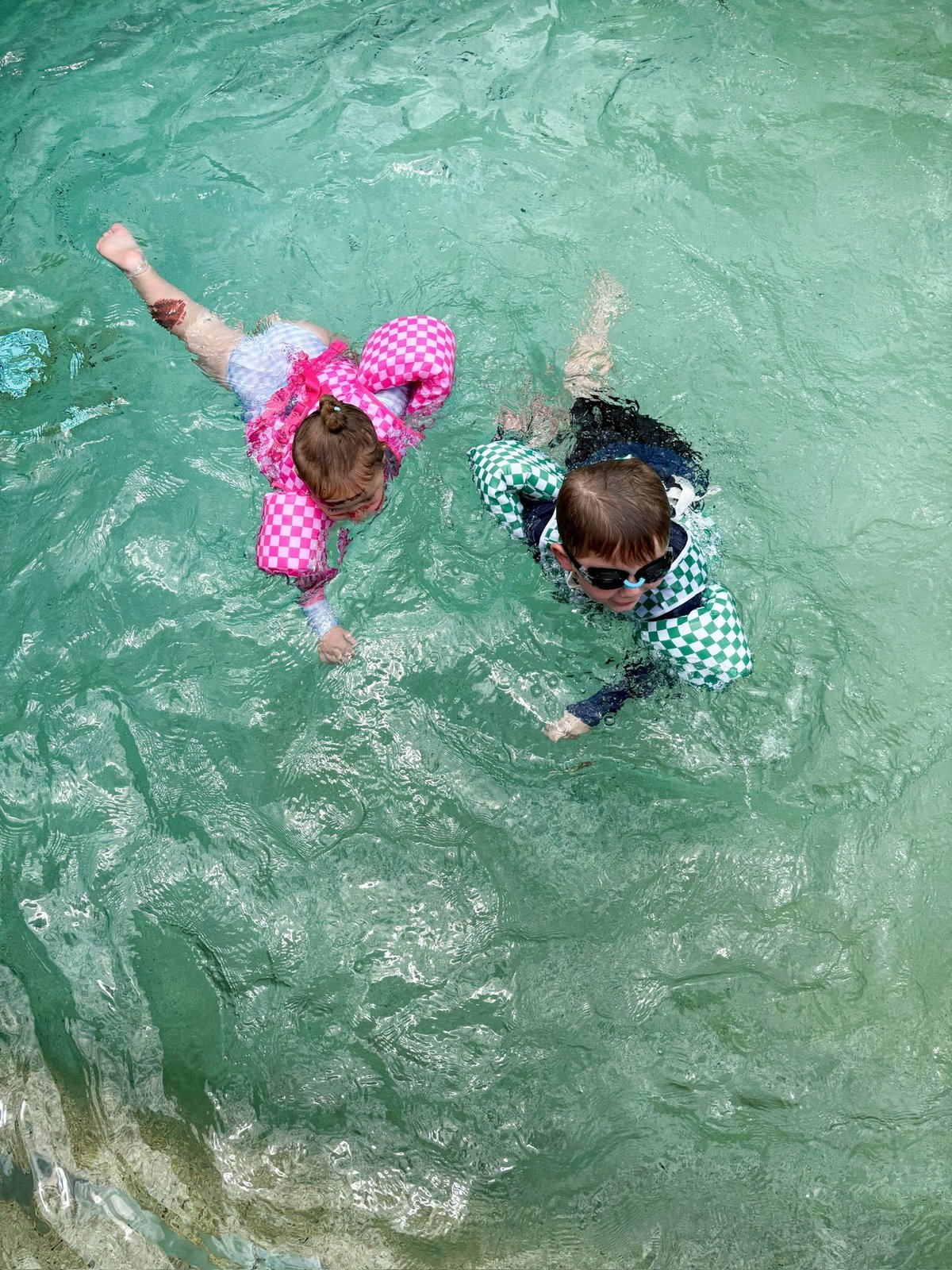
Pool time can be a great way for toddlers to become more comfortable around water and begin developing early swimming skills. But young children require constant supervision around pools, even when they're wearing a swim aid or have experience in the water.
Here are some important pool safety practices for parents and caregivers of young children.
1. Stay Within Arm's Reach
Young children should have close, attentive adult supervision whenever they are in or around water.
For toddlers and inexperienced swimmers, an adult should stay close enough to provide immediate assistance when needed. Avoid distractions such as phones, conversations or other activities that can take attention away from the child.
2. Understand What a Swim Aid Can — and Can't — Do
Wearable swim aids can help children become more comfortable in the water, but they should never replace adult supervision.
It's also important to understand the difference between a recreational learn-to-swim aid and a U.S. Coast Guard-approved life jacket.
Drip Floats are learn-to-swim aids designed for supervised recreational water use. They are not U.S. Coast Guard-approved life jackets or lifesaving devices.
If you're unsure about the difference, read our Swim Float vs. Swim Vest: What's the Difference? guide.
3. Choose a Swim Float That Fits Properly
Always follow the manufacturer's recommended age and weight guidelines when choosing a swim float.
A float that is too large or too small may not fit the child as intended.
Drip Floats are designed for children ages 2+ who weigh approximately 25–50 lbs. They feature adjustable back straps and shoulder straps to help parents achieve a comfortable fit.
For more information, read What Size Swim Float Does My Child Need?
4. Help Children Become Comfortable Around Water Gradually
Not every toddler is immediately comfortable in a swimming pool.
Start slowly and allow children to become familiar with the water at their own pace. Sitting on the pool steps, splashing, practicing kicking and spending time in shallow water with an adult can all help create positive experiences.
Read our guide on How to Help Your Toddler Get Comfortable in the Water for more ideas.
5. Teach Simple Pool Rules Early
Even young children can begin learning basic rules around pools.
Teach children to wait for an adult before entering the water, avoid running around the pool deck and never enter the pool without permission.
Repeating these rules consistently can help make them part of your family's normal pool routine.
6. Don't Rely on Flotation Alone
No flotation product makes a child drown-proof.
Parents and caregivers should continue actively supervising children regardless of whether they're wearing a swim float, swim vest or other flotation product.
Swimming lessons and developing water skills are also important parts of helping children become safer and more confident around water.
7. Secure the Pool When It Isn't Being Used
Pool safety continues even after swimming is finished.
Residential pools should have appropriate barriers that help prevent young children from reaching the water without an adult. Gates should be properly secured, and toys should be removed from the pool area when swimming is over so they don't attract children back toward the water.
Building Confidence While Keeping Safety First
Learning to enjoy the water can be an exciting part of childhood. The goal is to help children build confidence and swimming skills while parents maintain close, attentive supervision.
If you're choosing a swim aid for your child, our Best Swim Floats for Toddlers: What Parents Should Look For guide explains some of the features to consider.
You can also explore the Drip Floats Kids Floaties collection, designed for children ages 2+ and approximately 25–50 lbs.
Drip Floats are learn-to-swim aids and are not U.S. Coast Guard-approved life jackets or lifesaving devices. Always use with constant, capable adult supervision.